What Are the Top 10 Types of Inflatable Boats?

Time:2026-09-16 Author:Oliver
0%

An Infatable Boat can be a quiet tender beside a yacht, a fishing platform at dawn, or a compact craft carried in a car trunk. Its flexible tubes, high air volume, and shallow draft create practical advantages. They also create risks when owners ignore pressure, seams, valves, or load limits.

Market evidence shows why this category deserves closer attention. The National Marine Manufacturers Association reported strong recreational boating participation and billions of dollars in annual economic activity in the United States. Meanwhile, Grand View Research identifies growing demand for lightweight, portable watercraft across leisure and commercial applications. These reports do not treat every inflatable model equally. That distinction matters.

Marine surveyor David Pascoe offers a useful warning: “A boat is only as safe as its weakest component.” The exact wording is often expressed differently, but the principle remains sound. A premium fabric cannot compensate for a damaged transom. A powerful engine cannot correct poor weight distribution. Even a small valve leak can become serious offshore.

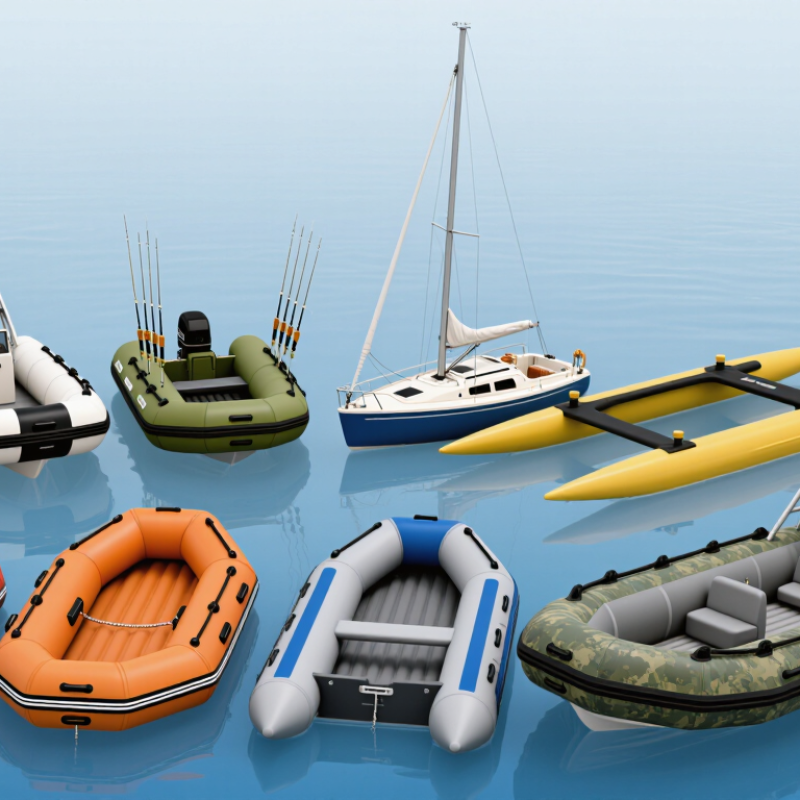
This guide examines the top 10 types of inflatable boats, including roll-up dinghies, rigid inflatable boats, fishing models, sailing tenders, sport catamarans, and rescue craft. Each type serves a different environment. Calm lakes demand different features from coastal passages or fast-moving rivers. Some choices are excellent. Others look attractive but perform poorly in real use. The goal is not to declare one universal winner. It is to connect construction, portability, stability, safety equipment, and intended water conditions with the right boat.
What Are the Top 10 Types of Inflatable Boats?

How Inflatable Boats Are Classified by Structure and Purpose

What Are the Top 10 Types of Inflatable Boats?

Inflatable boats are best classified by structure and purpose, not appearance alone. A roll-up dinghy uses flexible air chambers and a slatted floor for easy storage. An air-deck dinghy adds a high-pressure floor, improving comfort and stability. A rigid inflatable boat combines inflatable tubes with a solid hull for speed and sharper handling. A catamaran inflatable uses two separated tubes, reducing drag in calm water. A pontoon boat offers a wide platform for relaxed fishing or short trips. Structure matters here.

Purpose creates another useful group. An inflatable kayak is narrow and efficient for touring on lakes or slow rivers. An inflatable canoe provides more carrying space and a higher seating position. A whitewater raft has reinforced tubes, multiple chambers, and strong drainage. An inflatable fishing boat usually includes rod holders, mounting points, and stable flooring. An inflatable sailing boat adds a mast system and responds to wind rather than an engine.

The categories overlap, and that is where many guides become too neat. Some fishing boats also work as tenders. Some kayaks carry surprisingly heavy loads. During inspection, check seams, valves, floor pressure, drain systems, and chamber separation. A boat can feel stable beside a dock but behave differently in wind or moving water. I would not choose by length alone. Load capacity, intended water, transport method, and user experience deserve equal attention. Small details matter. Manufacturer specifications should guide the final decision, while practical testing can reveal comfort and handling problems that measurements miss.

Rigid Inflatable Boats, Sport Boats, and Tender Boats

What Are the Top 10 Types of Inflatable Boats?

Rigid Inflatable Boats, Sport Boats, and Tender Boats

Inflatable boats serve different jobs, and their designs matter on the water. Rigid Inflatable Boats combine a solid hull with air-filled tubes. They track well, resist spray, and handle choppy coastal conditions. Sport boats usually add deeper floors, steering consoles, and stronger engines for quick day trips. Tender boats are smaller and easier to lift aboard a larger vessel. They work well for short shore runs, marina transfers, and carrying light equipment.

Other useful types include roll-up boats, fishing boats, rescue boats, sailing inflatables, inflatable catamarans, river boats, and leisure boats. Roll-up models store neatly in a car or locker. Fishing designs often provide stable floors and built-in rod holders. Rescue boats need high visibility, strong grab lines, and dependable inflation. Sailing inflatables use fittings that support controlled movement under wind. Catamarans offer extra stability through two separate air chambers or hulls. River boats need abrasion-resistant materials for rocky banks. Leisure boats prioritize comfort, shade, and simple handling.

During a dockside inspection, I check seams, valves, handles, and floor rigidity before launch. Small leaks can become serious during a long outing.

An RIB may feel safer, yet its rigid hull demands more storage space. A tender may be convenient, but its lighter build can feel less stable in waves. I once underestimated wind near a sheltered harbor. That mistake changed how carefully I assess weather, load balance, and engine power.

Always match the boat to the water, passengers, and intended use.

Rafts, Dinghies, and Fishing Inflatable Boats

What Are the Top 10 Types of Inflatable Boats?

Inflatable boats vary by hull shape, floor design, and intended water use. The ten common types include river rafts, sailing rafts, rescue rafts, dinghies, boat tenders, fishing boats, inflatable kayaks, canoes, catamarans, and paddleboards. Rafts usually favor stability and open space. They suit calm rivers, short crossings, and supervised recreational trips. Dinghies are smaller and easier to store. A reinforced transom can support a small outboard motor, but weight distribution remains critical. Fishing inflatables often add rod holders, inflatable seats, and high-pressure floors. These details improve comfort, though they also increase setup time.

Market demand supports this product diversity. Grand View Research estimated the global inflatable boats market at about USD 2.7 billion in 2023, with continued growth expected through 2030. Its analysis connects growth with compact storage, recreational boating, and easier transport. However, market size does not prove suitability. A lightweight kayak may perform poorly in wind. A wide raft may feel safer but paddle slowly. That trade-off is often overlooked.

In practical inspections, I check valve condition, seam bonding, floor pressure, and drain design. ISO 6185 provides a useful technical reference for inflatable boat construction and testing. Fishing users should also inspect attachment points before carrying coolers or batteries. Small failures matter. My own judgment has changed: higher capacity is not automatically better. Manufacturers publish load limits, yet users sometimes treat them as targets rather than boundaries. That mistake deserves more attention.

Kayaks, Canoes, Catamarans, and Pontoon Boats

What Are the Top 10 Types of Inflatable Boats?

Inflatable boats come in many practical forms. The ten common types include kayaks, canoes, catamarans, pontoon boats, dinghies, fishing boats, paddle boats, whitewater rafts, inflatable sailboats, and rescue boats. Each design balances stability, speed, weight, and storage differently. A kayak usually suits one or two paddlers on calm water. Its narrow shape moves efficiently, but it can feel less forgiving during entry. An inflatable canoe offers more room for camping gear and family trips. It tracks well, though strong wind may push it sideways.

Catamarans use two separate air chambers connected by a frame or deck. This structure feels stable and reduces rocking. It can work well for fishing or relaxed coastal exploration. Pontoon boats provide wide seating areas and excellent balance. Their open layout is comfortable, but wind resistance can make steering tiring. I have noticed that beginners often choose stability first, then underestimate transport weight.

Dinghies support short trips between shore and larger vessels. Fishing models add rod holders, reinforced floors, and useful storage. Paddle boats encourage slow outings on lakes. Whitewater rafts need reinforced materials and careful handling near rocks. Inflatable sailboats offer quiet movement, but they require better weather awareness. Rescue boats prioritize visibility, buoyancy, and fast deployment over comfort. Check air pressure before every launch. Small leaks matter. I still find compact boats harder to dry completely than expected, especially around valves and floor seams. Experiences can differ with water temperature, load, and wind.

How to Compare the Top 10 Inflatable Boat Types for Different Uses

Comparing the top 10 inflatable boat types starts with the intended water and load. An inflatable dinghy suits short harbor trips and tender work. A roll-up boat stores easily in a car trunk. A rigid inflatable boat offers better speed, steering, and stability. An inflatable kayak feels efficient for one or two paddlers on calm water. An inflatable canoe carries more gear, but wind can push it sideways. An inflatable raft handles groups and slow rivers. A whitewater raft needs reinforced floors, strong handles, and reliable self-bailing drainage. An inflatable fishing boat should provide rod holders, a stable floor, and quiet movement. An inflatable catamaran improves balance and can carry heavier equipment. An inflatable sailboat adds performance, but requires more setup and sailing skill.

Match construction to real conditions. PVC models are often lighter and less expensive, while reinforced fabric usually offers better resistance to sunlight and abrasion. Check the air chambers, valves, seams, floor design, and repair access. Small details matter. A low floor may become uncomfortable after several hours. A wide tube improves stability, yet it reduces interior space. Longer boats track better, while shorter boats turn more easily. For fishing, stability may matter more than speed. For touring, weight and packed size may matter more than maximum capacity. Always compare certified load ratings, not optimistic estimates. Test inflation time with the actual pump. I once underestimated storage space; the boat fit, but the oars did not. That mistake is easy to repeat. Weather changes quickly, so users should also inspect forecasts, wear suitable flotation equipment, and choose sheltered water when experience is limited.

What Are the Top 10 Types of Inflatable Boats? How to Compare Them for Different Uses

Inflatable Boat Type Typical Construction Typical Length Typical Capacity Stability Portability and Setup Best Uses Main Advantages and Limitations
Inflatable Dinghy Air chambers with an inflatable or slatted floor; some models have a rigid transom for an outboard motor. 2.0–4.0 m
(6.5–13 ft)
1–6 people Good Usually easy to carry and store; setup commonly takes about 10–25 minutes with a suitable pump. Tendering from a larger boat, short coastal trips, lake boating, harbor transport, and general recreation. Versatile and widely available. Smaller models have limited freeboard and are less suitable for rough or exposed water.
Inflatable Rigid Hull Boat (RIB) Inflatable tubes combined with a rigid fiberglass, aluminum, or composite hull and a rigid transom. 3.0–9.0 m
(10–30 ft)
2–15 people Very good More difficult to transport and store than soft-floor boats; larger models may require a trailer or davits. Fast coastal cruising, patrol work, diving, rescue support, watersports, and offshore day trips in suitable conditions. Excellent speed, handling, and load-carrying ability. It is heavier, more expensive, and less compact when stored.
Inflatable Kayak Narrow air-chamber hull with a sit-in or sit-on-top cockpit and a low center of gravity. 2.4–4.6 m
(8–15 ft)
1–3 people Moderate Highly portable; many recreational models pack into a carry bag and inflate in about 5–15 minutes. Flatwater touring, calm rivers, recreational paddling, and compact personal transport. Efficient under a paddle and easy to transport. It has less room for bulky cargo and can be more affected by wind than a heavier boat.
Inflatable Canoe Open, wider hull with inflatable side chambers and a raised or inflatable floor. 2.7–4.9 m
(9–16 ft)
1–3 people Good Generally compact when deflated; setup is often straightforward, although drying and packing require additional time. Recreational paddling, family trips, calm rivers, lakes, and carrying more equipment than a kayak. Offers an open cockpit and useful cargo space. It is usually slower and less directional than a touring kayak.
Packraft Ultra-light single-chamber or multi-chamber inflatable hull, often with a small spray deck and lightweight seat. 2.0–2.8 m
(6.5–9 ft)
1 person Moderate Extremely portable; designed to fit in a backpack and inflate manually in a few minutes. Hiking and paddling combinations, remote lakes, river crossings, and lightweight adventure travel. Very low carrying weight and excellent packability. It has limited speed, cargo capacity, and protection in rough water.
Inflatable Fishing Boat Wide inflatable hull with an open interior, reinforced floor, fishing-mounting points, and sometimes a motor transom. 2.4–4.6 m
(8–15 ft)
1–5 people Good to very good Portability varies widely; drop-stitch floors and transoms improve performance but increase weight and setup time. Freshwater fishing, sheltered coastal fishing, angling access, and transport of rods and tackle. Stable and practical for fishing equipment. It can be slower and less comfortable in waves than a purpose-built rigid fishing boat.
Inflatable Pontoon Boat Two separate air-filled pontoons connected by a frame, seat, and sometimes a standing platform. 2.1–3.7 m
(7–12 ft)
1–2 people Very good Moderately portable; the frame adds assembly time and packed volume compared with a simple inflatable dinghy. Solo fishing, fly-fishing, calm lakes, slow rivers, and waters with easy shoreline access. Stable and maneuverable for one angler. It has limited capacity and should not be treated as a high-speed or offshore craft.
Inflatable Catamaran Two parallel inflatable hulls joined by a frame or deck, sometimes with a motor-ready transom. 3.0–6.0 m
(10–20 ft)
2–8 people Very good Usually requires more components and assembly than a single-hull inflatable; packed size depends on the frame design. Family recreation, sailing, fishing, river touring, and stable platform applications. Provides good stability and shallow draft. It may be less agile in tight spaces and can be sensitive to crosswinds.
Inflatable Sailing Dinghy Inflatable hull with a removable mast, sail, daggerboard or centerboard, rudder, and often an inflatable or rigid floor. 2.5–4.6 m
(8–15 ft)
1–4 people Good Portable but requires additional rigging time; the sail kit creates more parts to transport and store. Learning to sail, recreational sailing on lakes and sheltered coastal waters, and compact sailing expeditions. Combines sailing with easy storage and transport. Performance is generally lower than that of a comparable rigid sailing dinghy.
Inflatable Rescue or Liferaft Heavy-duty multi-chamber tubes, high-visibility fabric, grab lines, lifting points, and often a canopy or self-bailing floor. 2.0–6.0 m
(6.5–20 ft)
2–20+ people High when correctly deployed Designed for rapid deployment or emergency storage; certified equipment requires regular inspection and servicing. Emergency evacuation, maritime safety, flood response, professional rescue, and survival applications. Built for flotation and occupant protection rather than recreation. Capacity and safety depend on certification, equipment, maintenance, and operating conditions.
Comparison ranges are typical general-purpose specifications and vary by hull design, materials, load rating, local regulations, and water conditions. Always follow the manufacturer’s capacity plate and safety instructions.

Key comparison factors include intended water conditions, passenger and payload capacity, propulsion method, packed size, setup time, floor rigidity, self-bailing capability, and required safety equipment.

FAQS

What are the main types of inflatable boats?

Common types include rigid inflatable boats, dinghies, tenders, rafts, kayaks, canoes, catamarans, fishing boats, and sailing inflatables. Each type serves a different water condition and activity. Choose by purpose, not appearance.

What is a rigid inflatable boat best suited for?

A rigid inflatable boat combines a solid hull with air-filled tubes. It tracks well and handles coastal chop more confidently. It usually offers better speed and steering. However, the rigid hull needs more storage space.

When should I choose a tender boat?

A tender boat works well for short shore trips and marina transfers. It is smaller and easier to lift aboard another vessel. It can carry light equipment. Waves may feel less comfortable in a lighter tender.

Are roll-up boats useful for limited storage?

Yes. A roll-up boat can fit inside a car trunk or storage locker. Its compact shape simplifies transport. Setup still takes time. Check whether the packed boat leaves room for oars and the pump.

Which inflatable boat is suitable for fishing?

Fishing boats often include rod holders, stable floors, and inflatable seats. These features improve comfort during long sessions. Inspect attachment points before adding coolers or batteries. Capacity is not a target.

How do I compare inflatable boats for rivers and rougher water?

Match the hull, floor, and materials to the river conditions. River boats need abrasion-resistant surfaces for rocky banks. Whitewater rafts require reinforced floors and reliable self-bailing drainage. Calm water allows more choices.

What should I inspect before launching an inflatable boat?

Check the seams, valves, handles, floor pressure, and drain design. Look for slow leaks. Test the pump and repair kit. A small leak can become serious during a long outing.

How do wind, load, and weather affect boat choice?

Wind can push an inflatable canoe sideways and reduce control. A wide raft feels stable but may paddle slowly. Balance passengers and equipment carefully. I once underestimated wind near a sheltered harbor. That judgment was wrong.

Are lighter inflatable boats always better?

No. Lighter boats are easier to carry and store. They may feel less stable in waves, especially with uneven loading. Heavier models can improve stability but demand more storage. The perfect choice does not exist.

Conclusion

Inflatable boats can be classified by their structure, stability, portability, and intended use. Rigid inflatable boats combine an air-filled collar with a solid hull, offering speed, strength, and improved handling. Sport boats are designed for active recreation, while tender boats provide convenient transport between larger vessels and shore. Rafts and dinghies are practical choices for relaxed cruising, short trips, or general utility, whereas fishing inflatable boats emphasize stability, storage, and quiet movement on the water.

Other popular categories include kayaks and canoes, which are narrow and efficient for individual paddling, as well as catamarans and pontoon boats, which use multiple air chambers or separate tubes to create greater balance and carrying capacity. When comparing the top 10 types of Infatable Boat, users should consider passenger capacity, hull design, air-chamber layout, weight, setup time, durability, storage space, and the type of water involved. The best option depends on whether the priority is speed, fishing, exploration, transportation, or comfortable leisure.


Oliver

Oliver

Oliver is a seasoned marketing professional with a wealth of expertise in driving brand awareness and engagement. With a deep understanding of our company's product offerings, he consistently delivers high-quality content that enriches our professional blog. His insights not only shed light on......