Choosing a Flying Inflatable Boat means evaluating an aircraft and a watercraft as one system. Lift, payload, flotation, and water handling all matter. So do assembly time and transport size. A dramatic takeoff video proves little about loaded performance, crosswinds, or repeated landings. Check the manufacturer’s published limits.
Industry reports offer useful context, but not a shortcut. The National Marine Manufacturers Association reported a $230.3 billion annual U.S. recreational boating economic impact in its 2023 report. That figure covers the wider boating sector; it does not measure Flying Inflatable Boat sales or prove any model’s reliability. The U.S. Coast Guard’s 2023 recreational boating statistics recorded 4,040 accidents and 564 deaths. Those totals cover recreational boating broadly, not flying inflatable craft specifically. Still, they underline why training, equipment, and operating limits deserve careful attention.
Start with the intended use: calm lakes, coastal trips, or occasional transport. Match the rated payload to people, fuel, baggage, and safety gear—not just the advertised passenger count. Examine the hull fabric, seams, inflation chambers, repair access, and corrosion-resistant fittings. Ask for documented flight and water-test information, maintenance intervals, spare-part availability, and clear operating manuals. Verify that the configuration and required training meet applicable local requirements. A low purchase price can hide costly upkeep. And a spec sheet may leave important questions unanswered. Compare evidence, not promises, and be willing to walk away when performance data is vague.
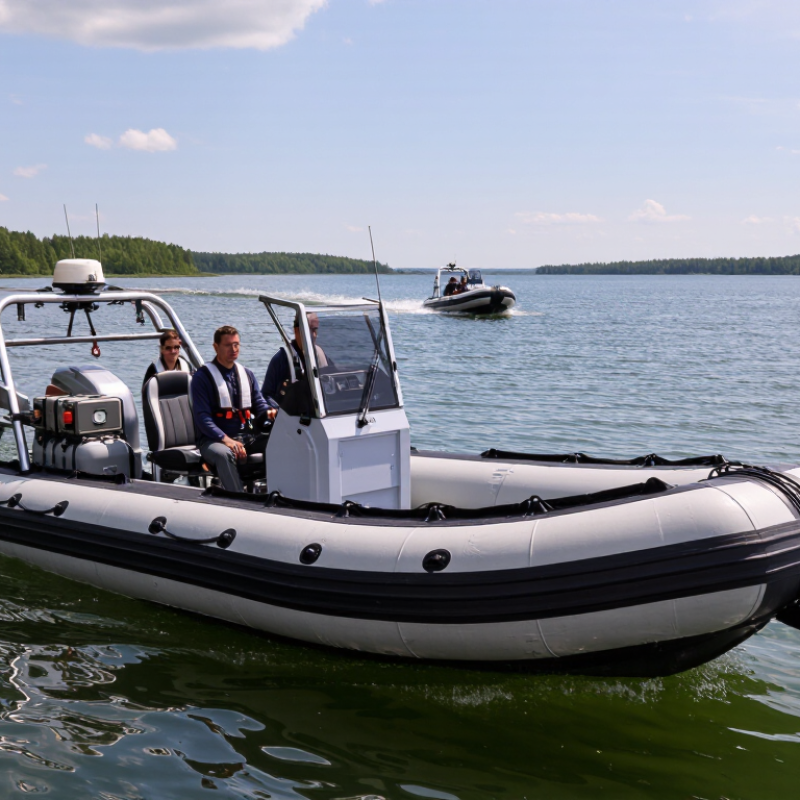
Define Your Intended Use and Flight Environment
Before comparing models, decide what the boat must do. Will you use it for short coastal trips, calm inland water, or remote-area access? Those needs affect useful range, passenger capacity, storage, and how easily the craft can be handled on shore. A boat intended for two people and light gear may feel cramped once you add a cooler, safety equipment, and fuel. Check the manufacturer’s stated payload and operating limits rather than judging capacity by appearance.
The flight environment matters just as much. Note typical wind, temperature, altitude, water conditions, and nearby obstacles at your intended launch and landing areas. A gusty shoreline, steep bank, or narrow beach can make setup and recovery difficult. Measure the space available, including room to handle the inflated hull and any flight equipment. Small details count.
Be specific. Record the locations and seasons you expect to fly, then compare those conditions with verified operating guidance for each model. Ask a qualified instructor or experienced operator to review your plan, especially if conditions change quickly. I would not assume a craft suited to a sheltered lake is appropriate for open water. That assumption is easy to make. It may also be wrong. Keep a margin for changing weather, passenger weight, and gear, even when your usual trips seem simple.
Compare Boat Design, Buoyancy, and Passenger Capacity
Choosing the best flying inflatable boat starts with its design, not its advertised speed. Inspect the floor, air chambers, seams, and attachment points before considering performance. A rigid or reinforced floor improves stability during boarding and landing. For flight-capable models, the frame should distribute weight evenly across the hull. Sharp edges and loose fittings deserve immediate attention.
Buoyancy depends on chamber volume, tube diameter, water conditions, and total load. Larger air chambers usually provide better reserve flotation, but they can increase weight and drag. Do not treat the maximum passenger number as a comfortable operating capacity. Four adults may fit on paper, yet feel crowded with fuel, batteries, safety gear, and personal bags. Leave reserve capacity. Measure each passenger and item honestly, including wet equipment.
Passenger capacity should match the boat’s balance, not just its seating layout. A practical test involves loading the intended passengers, checking trim, and observing how easily the boat responds to movement. Keep heavier equipment low and near the center. I would not rely on one neat specification; real loading is messier. Even a well-designed boat can feel unstable when passengers shift suddenly. Check the stated load limit, chamber pressure guidance, and operating conditions before every outing. A cautious comparison may reveal that a slightly smaller boat offers better control and safer buoyancy.
How to Choose the Best Flying Inflatable Boat? — Compare Boat Design, Buoyancy, and Passenger Capacity
| Comparison factor |
Inflatable hull |
Rigid hull with inflatable collar |
Aircraft floats or pontoons |
| Basic design |
Flexible air chambers form most or all of the hull. Floor construction varies by design. |
A rigid hull provides the main running surface; an inflatable collar adds flotation around the sides. |
Separate buoyant bodies support an aircraft on water. These are aircraft components, not automatically passenger boats. |
| Suitability for flight |
An inflatable boat is not flightworthy just because it floats. Use only a configuration approved for the specific aircraft and operation. |
The collar alone does not make the boat suitable for flight. Check the aircraft or craft’s approval, structural limits, and operating manual. |
Designed for waterborne aircraft operations. Confirm that the floats are approved for the aircraft and its intended load. |
| Buoyancy and capacity |
Check the manufacturer’s maximum load and chamber layout. A puncture or pressure loss can reduce available flotation. |
The rigid hull and collar contribute differently to flotation. Use the stated capacity and loading limits rather than estimating from collar size. |
Use the aircraft documentation for water-operation limits. Float displacement alone does not establish a safe passenger load. |
| Passenger capacity |
Follow the boat’s capacity plate and applicable rules. Do not treat a passenger count as a flight seating approval. |
Follow both the boat’s rated capacity and, when applicable, the aircraft’s approved seating and weight limits. |
Passenger numbers are set by the aircraft’s approved seating configuration and weight-and-balance limits, not by the floats alone. |
| Weight and payload check |
Count the boat, motor, fuel, battery, equipment, and occupants against the rated load. |
Include the rigid hull, collar, propulsion system, fuel, equipment, and occupants in the total load calculation. |
Use the aircraft’s required weight-and-balance calculation, including the float installation, fuel, occupants, and baggage. |
| Practical checks before choosing |
Inspect seams, valves, inflation pressure, floor rigidity, and the availability of repair materials. |
Inspect the hull, collar attachment, inflation system, drains, and the manufacturer’s maintenance instructions. |
Check attachment points, corrosion protection, water rudders, maintenance requirements, and aircraft-specific operating documentation. |
Buoyancy reference: in fresh water, each litre of displaced water provides approximately 1 kg of gross buoyant force; in seawater, the equivalent is about 1.025 kg. These figures describe gross buoyancy, not usable payload. Always follow the applicable capacity plate, aircraft documentation, and local regulations.
Evaluate Engine Compatibility, Weight, and Portability
Choosing a flying inflatable boat starts with matching the engine, not admiring the advertised speed. Check the recommended horsepower, shaft length, and maximum engine weight. A motor that is too heavy can raise the stern and reduce control during takeoff. During setup, measure the transom height and confirm that the propeller remains clear. Small mismatches matter. Electric and petrol systems also distribute weight differently, so test balance with fuel, batteries, and safety gear onboard.
Weight determines whether the boat is genuinely portable or merely movable in a brochure. Ask for the complete operating weight, including the floor, seats, engine, battery, fuel, and repair kit. A hull that feels manageable on land may become awkward near a windy shoreline. Look for strong carry handles, compact packed dimensions, and a storage bag one person can lift safely. I prefer a short route from the vehicle to the water. Longer carries reveal weak straps and poor balance. I have underestimated packed weight before. Leave room for error.
Tips:
Inflate the boat fully and inspect seams, valves, and floor stiffness. Test the intended engine with the real load, if possible. Record packed dimensions and weigh each major component separately. An experienced marine technician can verify compatibility before purchase. Do not trust dry specifications alone; handling can change sharply with extra passengers or equipment.
Check Safety Features, Materials, and Certification Standards
Choosing a flying inflatable boat requires more than checking its advertised speed. Safety evidence matters most. The U.S. Coast Guard’s 2023 Recreational Boating Statistics recorded 4,064 accidents, 564 deaths, and 2,126 injuries. These figures cover recreational boats generally, not flying inflatables specifically, but they show why stability and operator protection deserve careful inspection.
Look for separate air chambers, pressure-relief valves, strong grab lines, non-slip flooring, and an accessible emergency shutoff. Drop-stitch or reinforced fabric can improve stiffness, while properly bonded seams resist leaks and abrasion. Ask for material specifications, seam-testing records, and the boat’s maximum load under realistic conditions. A specification sheet is not proof of safety. ISO 6185 covers several inflatable-boat categories, but its relevance depends on the boat’s design, length, and propulsion system. For European sales, request applicable CE documentation and the Declaration of Conformity. If the craft actually leaves the water, marine certification alone may be insufficient; aviation authorities may require additional approval. This detail is often overlooked.
Tips: Check the certificate’s scope, not only its logo. Inflate every chamber and measure pressure before use. Wear a certified life jacket and use the recommended restraint system. Ask whether testing included cold temperatures, ultraviolet exposure, impact, and repeated inflation cycles. I would also request an independent inspection. Even experienced buyers can trust attractive engineering claims too quickly. Keep records of inspections, repairs, and pressure readings. Safety becomes clearer when the paperwork matches the physical boat.
How to Choose the Best Flying Inflatable Boat?
Safety features, materials, and certification standards should be checked together before selecting an inflatable boat for powered or airborne water operations.
The practical priority scores below are a selection guide, not certification ratings. Independent air chambers, pressure-control systems, durable coated fabrics, suitable personal flotation devices, and documented compliance with applicable standards such as ISO 6185 and ISO 12402 should receive the highest attention. Confirm the exact requirements for the boat’s size, propulsion system, operating area, and local regulations.
Match the Boat to Your Budget, Maintenance Needs, and Skills
A flying inflatable boat should fit the way you plan to use it, not just the price on its tag.
Compare the complete cost: training, storage, fuel, routine inspections, replacement fabric, and repairs. A lower purchase price can hide expensive upkeep. That adds up. Ask a qualified technician what parts need frequent attention, and whether local service is available. Check the hull’s fabric, seams, valves, and attachment points during scheduled inspections; sun exposure and repeated folding can wear them over time.
Be honest about your skills.
You’ll need more than confidence: training, sound judgment in changing weather, and the ability to recognize when a flight should wait. Skills matter. A heavier setup may demand different handling and more preparation, so match the aircraft’s approved limits to your experience and intended load. I would not buy based on an impressive sales demonstration alone; it may not reflect ordinary conditions. Request maintenance records, arrange an independent inspection, and budget for instruction before choosing. The right option is one you can afford to maintain and operate within your training—not simply the one that looks most exciting.
Conclusion
Choosing the best Flying Inflatable Boat begins with understanding how and where you plan to use it. Consider whether your trips will involve calm lakes, coastal waters, fishing areas, or occasional air transport, since each environment may require different stability, buoyancy, and construction features. Compare the boat’s layout, passenger capacity, load limit, and storage space to ensure it meets your practical needs without becoming difficult to control.
Engine compatibility, total weight, and portability are also essential factors. Select a model that works safely with your intended power system and can be transported or inflated with reasonable effort. Pay close attention to durable materials, secure air chambers, reliable valves, protective flooring, and recognized safety or certification standards. Finally, match the boat to your budget, maintenance skills, and available time. A slightly simpler design may be a better choice if it is easier to repair, store, and operate consistently.

 Huayue Toys